
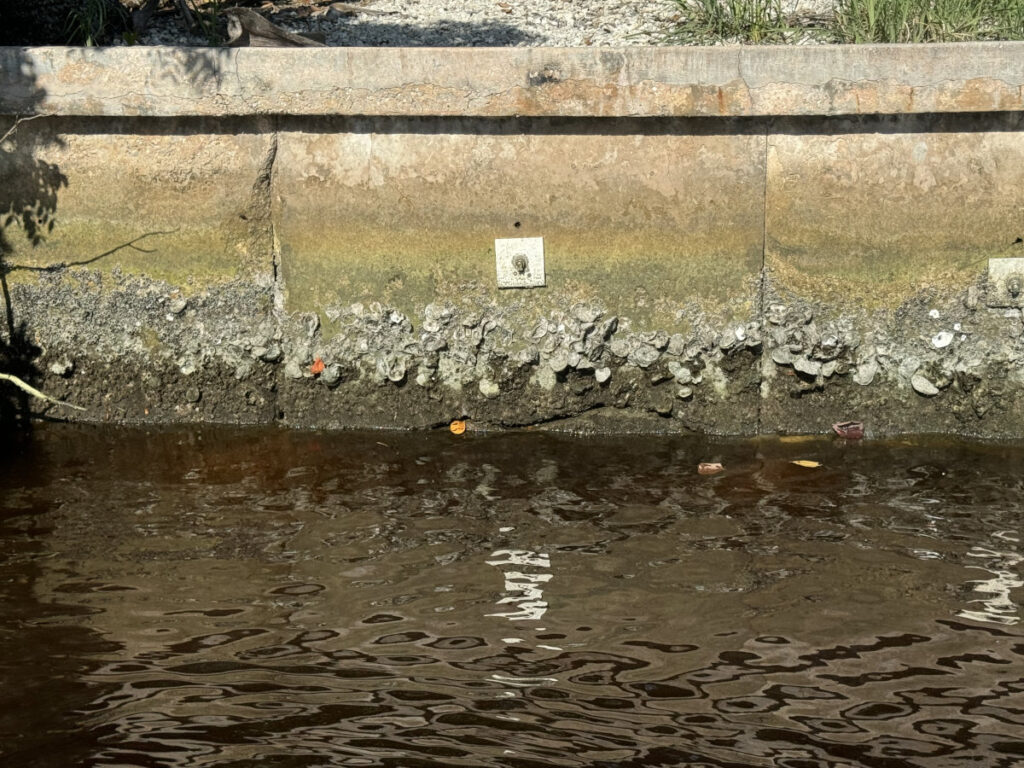
Saltwater, Soil Loss & Hydrostatic Pressure Explained Simply
- April 1, 2026
Introduction: The Forces Working Against Every Seawall (Explained Simply)
If you own waterfront property, your seawall is constantly working—even when nothing looks wrong.
Saltwater exposure, soil loss, and hydrostatic pressure are the three most common forces affecting seawalls over time. They don’t cause sudden failure overnight. Instead, they slowly change what’s happening behind the wall—often long before cracks or movement appear.
Short answer:
Saltwater weakens materials, soil loss removes support behind the wall, and hydrostatic pressure pushes outward when water can’t escape. Together, they explain why seawalls age, shift, and eventually need maintenance or repair.
This guide breaks these concepts down in plain language—no engineering background required—so homeowners, HOAs, and managers can understand what’s normal, what to watch for, and how professionals address these issues early.
What This Topic Means for Waterfront Owners, HOAs & Managers
Whether you own a single-family home, manage an HOA, or oversee a commercial waterfront, these forces affect you in practical ways:
- Maintenance planning: Knowing what causes deterioration helps you plan repairs before emergencies.
- Budget forecasting: Soil loss and pressure issues are easier—and cheaper—to manage early.
- Inspections & resale: Buyers, inspectors, and insurers increasingly evaluate seawall condition, not just appearance.
A seawall isn’t just a concrete or vinyl wall. It’s a system that relies on:
- Soil support behind it
- Water pressure being properly relieved
- Materials holding up in a saltwater environment
Understanding these basics helps you make better decisions—and ask better questions—when inspections or repairs are recommended.
Why Saltwater, Soil Loss & Pressure Matter (Expert Insight)
Based on coastal inspections and engineering studies:
- Over 60% of seawall issues begin behind the wall, not on the visible face
- Most seawalls don’t fail because of age alone—but because water and soil movement weren’t properly managed
- Many seawalls could last decades longer with drainage and stabilization
“Seawalls rarely fail because of one big event. It’s usually slow, invisible changes happening behind the wall over time.”
— Coastal Structural Specialist
This is why understanding these forces matters more than knowing the seawall’s age or material alone.
The Three Forces Explained (Step-by-Step & Simply)
1. Saltwater: Why It’s Tough on Seawalls
What it is:
Saltwater contains chlorides that accelerate wear on many building materials.
What it does over time:
- Penetrates porous materials like concrete
- Speeds up corrosion of steel and rebar
- Breaks down protective coatings
Enters small cracks and joints
Why it matters:
Saltwater doesn’t usually cause sudden damage. Instead, it shortens lifespan by slowly weakening materials from the inside.
Real-world example:
A concrete seawall may look solid on the surface, but saltwater intrusion can corrode internal steel reinforcement long before cracks appear.
2. Soil Loss: The Hidden Problem Behind the Wall
What it is:
Soil loss happens when water moves fine soil particles out from behind the seawall through cracks, seams, or unprotected joints.
What causes it:
- Missing or clogged drainage
- Open seams between panels
- Tidal action and wave movement
- Poor backfill compaction
Why it matters:
- Voids form behind the wall
- The wall loses lateral support
Common signs:
- Sinkholes or settling near the cap
- Gaps between the wall and ground
- Soft or hollow spots behind the seawall
Soil loss is one of the most common—and most misunderstood—seawall issues.
3. Hydrostatic Pressure: The Outward Push
What it is:
Hydrostatic pressure is the force water exerts when it builds up behind a wall and has nowhere to go.
How it happens:
- Rainwater collects behind the seawall
- Tides raise groundwater levels
- Poor or missing drainage traps water
Why it matters:
Water is heavy. When pressure builds:
- It pushes outward on the seawall
- It increases stress on seams and joints
- It accelerates cracking and movement
Simple analogy:
Think of pushing on a door from behind with a full water tank. The pressure adds up—even if the door looks fine at first.
How These Three Forces Work Together
- Saltwater degrades materials and opens pathways
- Water moves soil out through those openings
- Water pressure increases behind the wall
- The seawall loses support and begins to move
Common Myths & Mistakes to Avoid
❌ Myth #1: “If it’s not cracked, it’s fine”
Many serious issues start behind the wall where they aren’t visible.
❌ Myth #2: “New seawalls don’t need inspections”
All seawalls—new or old—should be periodically checked.
❌ Myth #3: “Material alone prevents failure”
Concrete, vinyl, and steel all rely on proper drainage and soil support.
❌ Mistake #4: Ignoring small signs
Minor settling or drainage issues are easier to address early.
Pro Tips & Tools Used by Seawall Professionals
Professionals don’t just look at the wall—they evaluate the entire system.
Common tools & methods:
- Seawall drains to relieve hydrostatic pressure
- Foam injection to stabilize soil and fill voids
- Seam and joint sealing to prevent soil migration
- Helical tie-back anchors to restore structural support
- Cap inspections to catch early settlement
- Identify soil loss and pressure issues
- Relieve trapped water
- Stabilize soil
- Reinforce structure if needed
FAQs: Saltwater, Soil Loss & Hydrostatic Pressure
Water movement and soil loss behind the wall—not visible surface damage.
Often, yes. Foam injection and drainage improvements are common solutions.
Over time, unmanaged pressure increases stress and accelerates deterioration.
Yes. While vinyl resists corrosion, it still relies on soil support and drainage.
Typically every 1–3 years, or sooner if changes are noticed.
Final Takeaways: What Actually Works
- Saltwater weakens materials over time
- Soil loss removes the support seawalls depend on
- Hydrostatic pressure pushes outward when water can’t escape
- Most problems start behind the seawall
- Early evaluation is easier and more cost-effective
Owning a seawall doesn’t mean waiting for something to go wrong. It means understanding how it works—and how professionals keep it working longer.
👉 If you’re unsure what’s happening behind your seawall, a professional inspection can provide clarity without pressure.
Seawall Savers helps homeowners, HOAs, and managers understand conditions, prioritize maintenance, and protect long-term value.
Related Posts
- All Posts

Recent Posts
-
Concrete vs. Vinyl vs. Steel Seawalls: Pros, Cons & Longevity
-
How Long Do Seawalls Last in Florida? A Complete Homeowner & Investor Guide
-
Preventive Maintenance for Seawalls: What Actually Works
-
Saltwater, Soil Loss & Hydrostatic Pressure Explained Simply
-
Signs Your Seawall Needs Professional Attention (Not an Emergency)