How Long Do Seawalls Last in Florida? A Complete Homeowner & Investor Guide
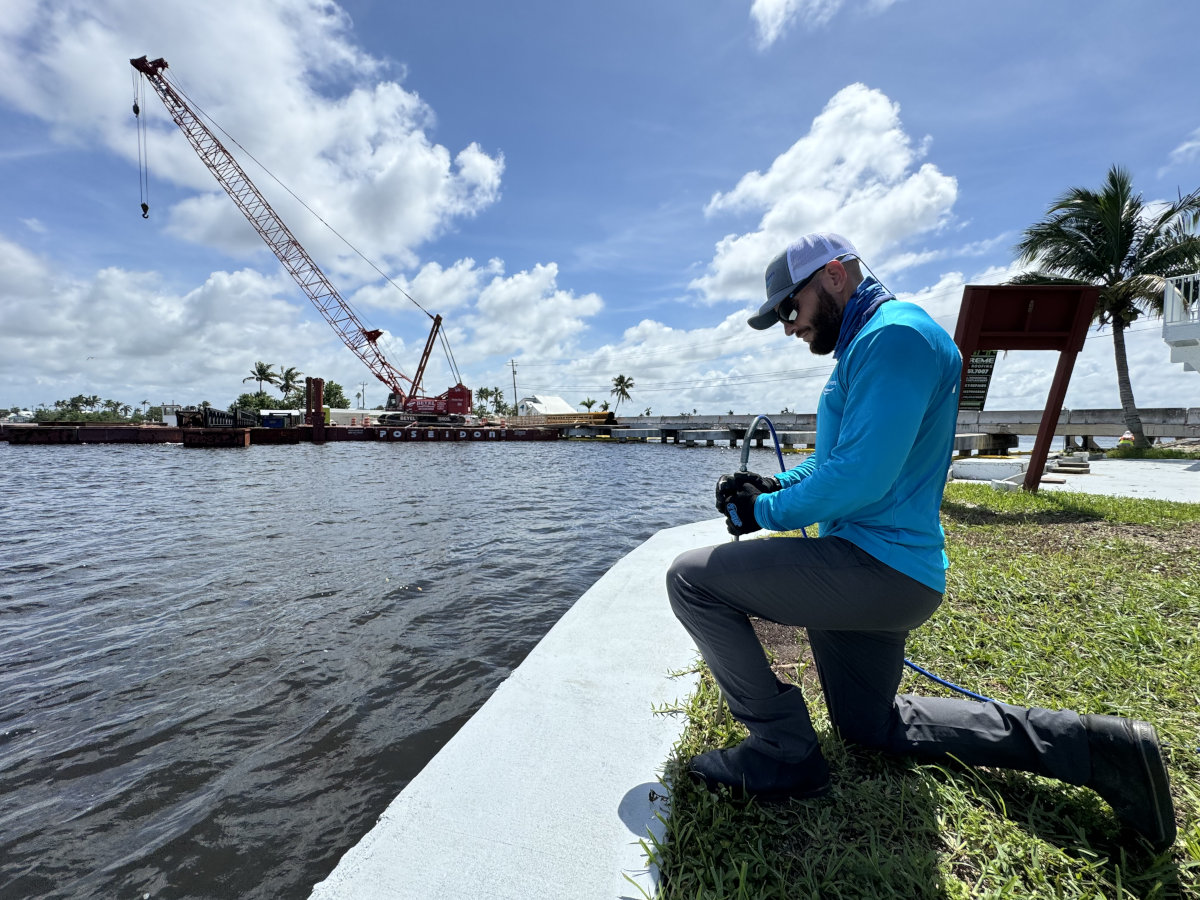

If you own waterfront property in Florida, one question eventually comes up: how long will my seawall actually last?
The short answer: most Florida seawalls last between 25 and 50 years, depending on materials, soil conditions, water exposure, and—most importantly—maintenance.
In this guide, you’ll learn:
Whether you’re a homeowner, HOA board member, investor, or marina manager, this article gives you a clear, practical understanding of what to expect—and how to protect your shoreline investment.
A seawall isn’t just a retaining wall—it’s a structural system that protects:
In Florida, seawalls work harder than in most states due to:
Seasonal storms and heavy rainfall
For homeowners, a failing seawall can affect property value and safety.
For investors and HOAs, it impacts long-term capital planning and insurance risk.
For commercial and marina properties, it affects operations and liability.
Understanding lifespan helps you budget smarter, schedule inspections, and avoid surprise repairs.
According to coastal engineering studies and field inspections across Florida:
“Most seawalls don’t fail suddenly—they deteriorate slowly and quietly behind the wall,”
— Marine Structural Engineer Insight
This means lifespan isn’t fixed. Two seawalls built the same year can have very different outcomes depending on drainage, reinforcement, and inspection history.
30–50 years
Residential canals, HOAs, marinas
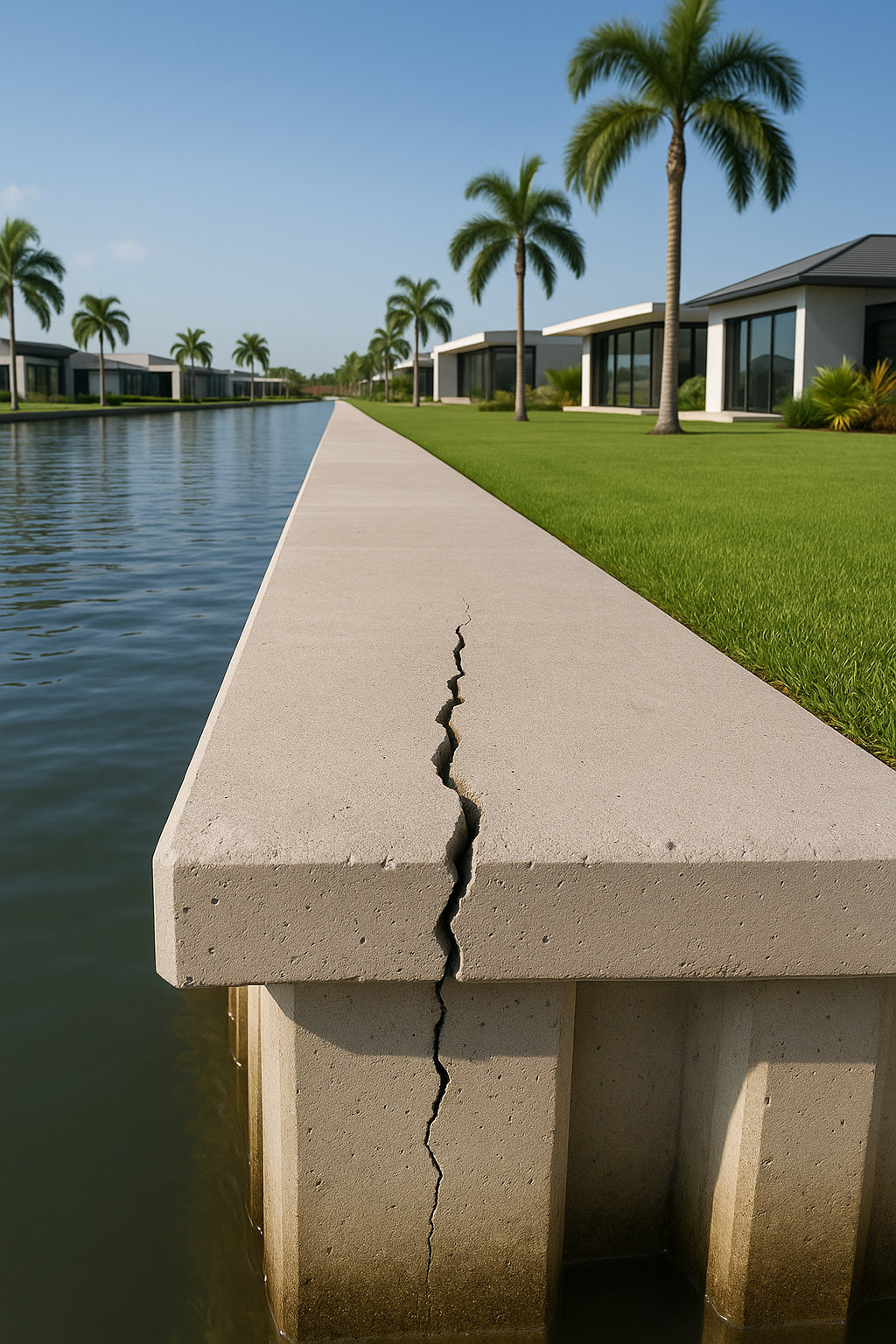
Concrete seawalls are strong but porous. Over time, saltwater intrusion can corrode internal rebar, leading to cracking and spalling.
35–50+ years
Newer construction and replacements
Vinyl seawalls resist corrosion but rely heavily on proper anchoring and soil stability.
Tie-back anchor systems are critical for long-term performance.
20–35 years (without coatings)
Steel seawalls are strong but vulnerable to corrosion in saltwater environments. Protective coatings and cathodic protection can extend life, but maintenance is key.
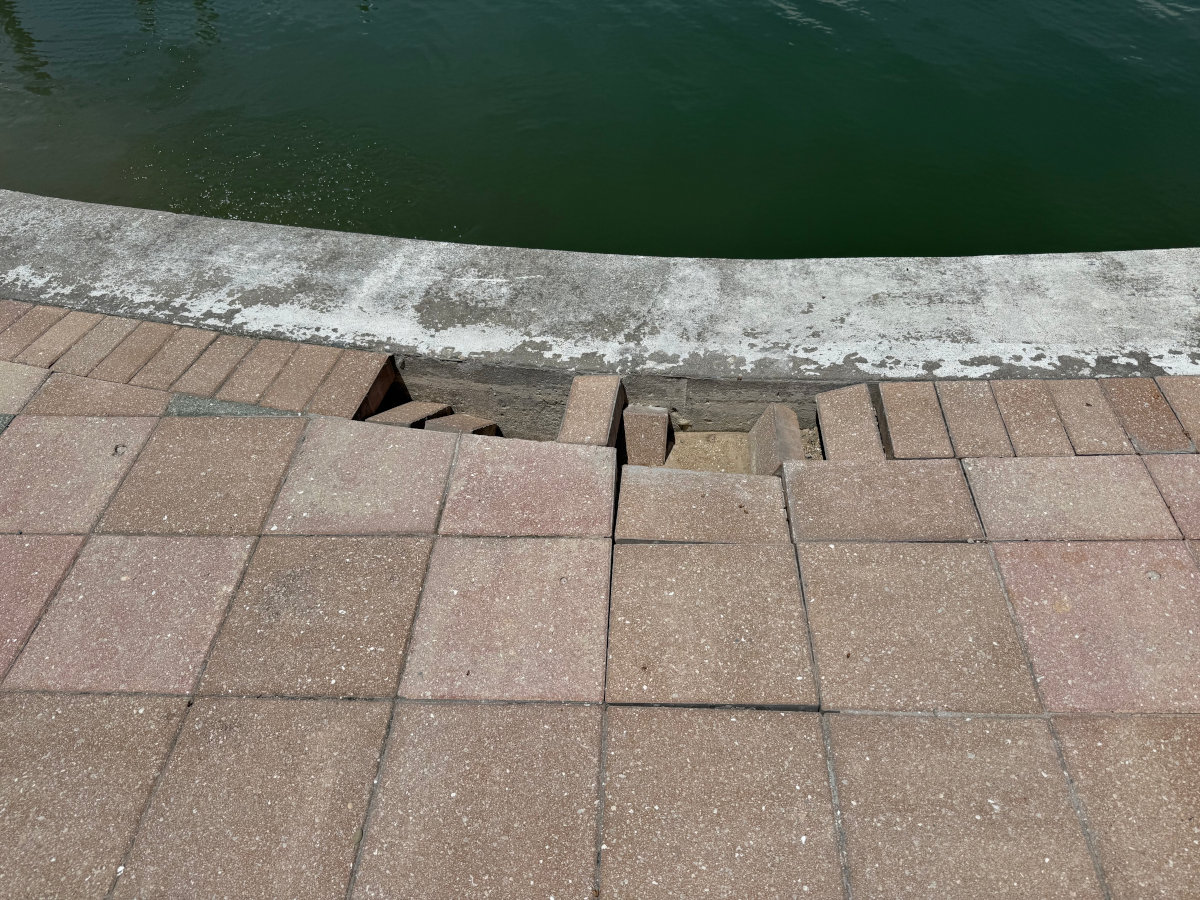
Florida’s sandy soils drain quickly—but that’s not always good. Water moving through soil can carry material with it, creating voids.
Solution:
Water trapped behind a seawall pushes outward. Over time, this pressure causes cracking, leaning, or joint separation.
Well-drained seawalls consistently outlast undrained ones.
Seams are natural weak points. When seals fail, water and soil escape.
Routine seam repair can add years—or decades—to a seawall’s life.
Older seawalls often lack modern reinforcement.
Helical tie-back anchor systems:
Extend functional lifespan significantly
Annual or biannual inspections catch:
These are far easier (and less expensive) to address early.
A seawall is usually considered “end of life” when:
However, many seawalls that look “old” are still structurally sound.
Modern repair techniques—foam injection, drains, seam repair, tie-backs, and cap replacement—often restore performance without full replacement.
Small cracks are common and often repairable.
Foam injection is specifically designed to address this.
In many cases, targeted repairs are equally effective and far less disruptive.
If you want to know where your seawall truly stands, a professional inspection provides clarity and options—not pressure.
👉 Schedule a seawall inspection with Seawall Savers to understand your seawall’s remaining lifespan and best next steps.
https://shorturl.fm/bo8c1
Start earning on autopilot—become our affiliate partner!
Promote our brand, reap the rewards—apply to our affiliate program today!
Refer friends, collect commissions—sign up now!
Partner with us and enjoy recurring commission payouts!
Refer friends and colleagues—get paid for every signup!
Drive sales, earn big—enroll in our affiliate program!
Become our partner now and start turning referrals into revenue!
Join forces with us and profit from every click!
Start earning passive income—join our affiliate network today!
hello world
hello world
lasix water pill
lasix water pill
buy generic stromectol online
buy generic stromectol online
doxycycline hyclate 100 mg capsule
doxycycline hyclate 100 mg capsule
Start earning on every sale—become our affiliate partner today!
diflucan
diflucan
Sign up for our affiliate program and watch your earnings grow!
amoxil
amoxil
sertraline 25mg cost
sertraline 25mg cost
diflucan pill
diflucan pill
https://shorturl.fm/6R6LE
https://shorturl.fm/aaREo
https://shorturl.fm/M7ixF
https://shorturl.fm/0Zm1n