Preventive Maintenance for Seawalls: What Actually Works
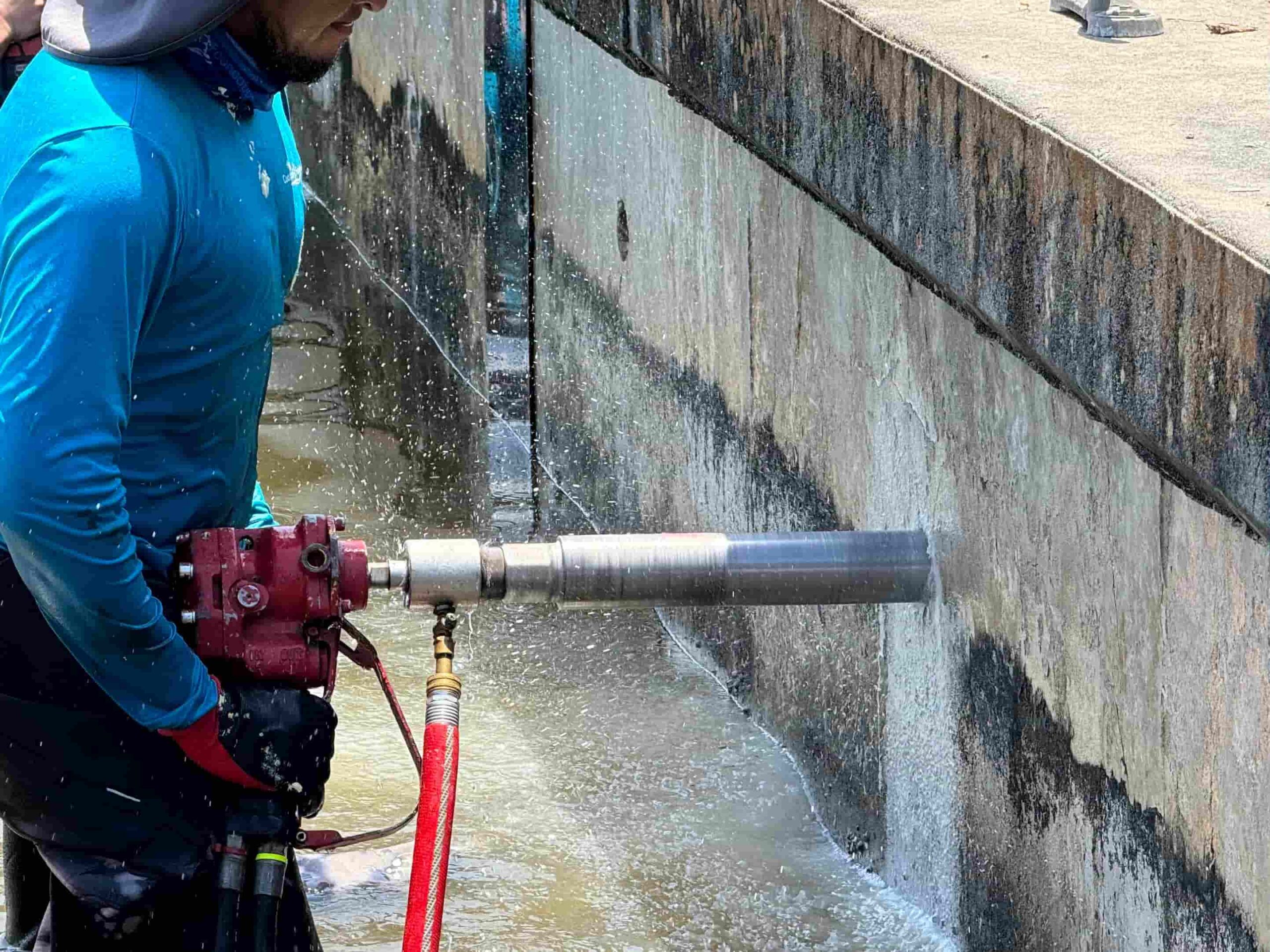

Most seawall failures don’t happen overnight. They happen quietly—behind the wall, below the surface, and out of sight—until the damage is expensive, disruptive, and unavoidable.
Preventive maintenance for seawalls works when it focuses on managing water pressure, soil loss, and structural connections before visible failure occurs. That means routine inspections, proper drainage, timely seam repairs, and proactive reinforcement—not waiting for leaning walls or sinkholes to appear.
In this guide, you’ll learn:
Whether you’re a homeowner, HOA board member, or property manager, this article breaks it down in clear, practical terms.
Preventive seawall maintenance is not cosmetic. It’s not about patching cracks for appearance or reacting only after damage becomes obvious.
At its core, preventive maintenance focuses on three controllable forces that cause most seawall failures:
Think of your seawall like a retaining wall holding back wet sand.
If water can’t escape, pressure builds.
If soil washes out, the wall loses support.
If connections weaken, the wall starts to move.
Preventive maintenance addresses all three—early.
For:
Managers & Decision Makers: It creates predictability and extends asset lifespan.
Industry studies and field data consistently show:
“By the time a seawall visibly leans or cracks widen, the real damage has usually been happening underground for years.”
— Seawall Inspection Specialist, SWFL
In coastal regions like Florida:
These conditions make preventive maintenance essential, not optional.
A professional inspection identifies early warning signs such as:
Best Practice:
HOAs / Commercial: annually or after major storms
Drainage is the single most important factor in seawall longevity.
Why it matters:
When water can’t escape, hydrostatic pressure builds up and pushes the wall forward.
Preventive solutions include:
No drainage = pressure buildup = structural failure risk.
Even small seam gaps can allow:
Preventive seam repair methods:
This is one of the highest ROI maintenance actions available.
When soil loss is already present—but the wall is still structurally sound—foam injection is often the best preventive solution.
What it does:
Foam injection is:
As seawalls age, they slowly lose their ability to resist lateral pressure.
Helical tie-back systems:
This is a preventive reinforcement strategy, not just a failure fix.
The seawall cap protects the top edge from:
A compromised cap allows water to enter behind the wall, accelerating deterioration.
Preventive actions:
Most seawalls fail internally long before visible movement occurs.
Cracks are often entry points for water and soil loss.
Even new walls require drainage checks and seam sealing.
Storms exploit existing weaknesses—maintenance should happen before severe weather.
This framework helps prioritize work based on risk and budget.
Preventive seawall maintenance works when it is:
The most effective strategies combine:
Structural reinforcement when needed
If you’re planning a seawall project—or evaluating an existing one—the smartest step isn’t guessing which material is “best.” It’s understanding how your seawall system works as a whole.
👉 Schedule a professional seawall inspection with Seawall Savers to evaluate material condition, lifespan, and the most cost-effective path forward—without pressure.
If you’re unsure about the condition of your seawall, a professional inspection is the smartest first step. Early insight leads to better decisions—and far lower costs.
Schedule a seawall evaluation with Seawall Savers to understand your risks, options, and long-term plan.
If you’re planning a seawall project—or evaluating an existing one—the smartest step isn’t guessing which material is “best.” It’s understanding how your seawall system works as a whole.
👉 Schedule a professional seawall inspection with Seawall Savers to evaluate material condition, lifespan, and the most cost-effective path forward—without pressure.

https://shorturl.fm/yNCqs
Claim Your Exclusive Bonus on AsterDEX https://is.gd/CGTnqR
Share your unique link and earn up to 40% commission!
Turn traffic into cash—apply to our affiliate program today!
Join our affiliate community and maximize your profits!
Boost your income effortlessly—join our affiliate network now!
reglan
reglan
cialis purchase
cialis purchase
doxycycline hyclate
doxycycline hyclate
finasteride
finasteride
linezolide
linezolide
dutasteride prescription uk
dutasteride prescription uk
vibramycin 100mg
vibramycin 100mg
diflucan over the counter australia
diflucan over the counter australia
zoloft without prescription
zoloft without prescription
Partner with us and enjoy high payouts—apply now!
lasix 40 mg
lasix 40 mg
cytotec medication
cytotec medication
flagyl 500 mg
flagyl 500 mg
pantoprazole sod 40 mg tablet
pantoprazole sod 40 mg tablet
clozapina
clozapina
viagra generico prezzo
viagra generico prezzo
https://shorturl.fm/ED3Kd
vidalista tadalafil 10 mg
vidalista tadalafil 10 mg
https://shorturl.fm/qtvCy